https://aleswa.com/wp-content/uploads/2019/07/AleswaWashingtonStamp-300x201.png00Davishttps://aleswa.com/wp-content/uploads/2019/07/AleswaWashingtonStamp-300x201.pngDavis2025-08-31 19:18:202025-08-31 19:18:20A summary of laws relevant to our industry enacted in 2025
On July 27, 2025, House Bill 1698 goes into effect, changing the rules on who needs to get a MAST permit.
Before the updated law, WAC 314-17-015 required MAST permits for anyone who serves, mixes, sells, and supervises the sale of alcohol at a licensed retail location.
As of July 27, 2025 MAST permits will be required for those who perform the tasks listed above at all on-premises, consumption licensed locations. This removes the distinction between “retail” and “non-retail” licensees.
https://aleswa.com/wp-content/uploads/2019/07/AleswaWashingtonStamp-300x201.png00Davishttps://aleswa.com/wp-content/uploads/2019/07/AleswaWashingtonStamp-300x201.pngDavis2025-08-12 20:53:422025-08-12 20:59:53House Bill 1698, MAST permits now required for non-retail establishments
Washington State is one of the few states in the United States that requires mandatory alcohol server training (MAST) for those who work as servers and bartenders. The objective of this requirement is to ensure that those who are serving alcohol in licensed establishments receive proper training on the responsible service of alcohol, including the identification of minors and the prevention of over-serving alcohol to customers.
The state of Washington requires that all servers and bartenders who handle alcohol must complete MAST training and obtain a permit before they can work in a licensed establishment. This training is mandatory and must be refreshed every five years to remain employed in the industry.
The MAST permit is obtained by successfully completing the Alcohol Server Training Course, which is administered and approved by the State Liquor and Cannabis Board of Washington. The course is offered both online and in-person classes, and the cost varies depending on the provider and the format in which the course is being offered.
For those who prefer an in-person course, the Board offers a list of approved training providers on their website, which can be sorted by location to find a course near the individual. It is essential to note that some courses may require pre-registration, so it’s vital to check with the provider before attending a course.
If an online course is preferred, the Washington State Liquor and Cannabis Board website also provides a list of approved online training providers for the MAST course. It is recommended to research the provider before selecting a course to ensure that it is approved by the Board.
Upon completion of the course, the student is provided with certification, which is required to obtain the MAST permit. The permit can be applied for online or through a paper application, which can be submitted to the Board. The permit is valid for five years, after which time the individual must complete the training again and obtain a new permit.
It is essential to note that the MAST permit is not transferable, meaning that if a person changes employers or works at a different location, a new permit must be obtained. Additionally, the permit is only valid for serving alcohol in Washington State and cannot be used in other states.
In conclusion, obtaining a MAST permit in Washington State is a straightforward process that requires completing an approved Alcohol Server Training Course, receiving certification, and submitting an application to the Liquor and Cannabis Board. While the training is mandatory, it provides invaluable knowledge for those who are serving alcohol in licensed establishments and helps ensure the safety of customers and the responsible service of alcohol. It’s worth noting that not obtaining a MAST permit when required may result in disciplinary actions or fines from the Washington State Liquor and Cannabis Board.Washington State has strict laws designed to regulate the sale and serving of alcohol, which means that all professional servers and bartenders must obtain a Mandatory Alcohol Server Training (MAST) permit before they are legally allowed to serve alcohol. This training is designed to provide individuals with the skills and knowledge they need to responsibly serve alcohol to their customers.
If you are a resident of Washington State and are looking to obtain your MAST permit, there are specific steps you will need to follow.
The first step in obtaining your MAST permit is to find a state-approved training provider. There are a variety of different training providers located throughout the state, so it is essential to research the options available to you and choose one that is reputable and certified.
Once you have found a training provider that meets your needs, you will need to enroll in the MAST training course. This training typically consists of several hours of instruction, and it covers a variety of subjects related to serving alcohol, including how to identify intoxication, recognizing when to cut off a customer, and how to deal with difficult situations that may arise.
After completing the training course, you will need to take an exam to demonstrate your knowledge of the material covered in the training. This exam is typically multiple choice and is designed to test your understanding of the laws and regulations related to alcohol service in Washington State.
If you pass the exam, you will then receive your MAST permit, which will allow you to legally serve alcohol in the state. However, it is essential to note that your MAST permit is only valid for five years, and you will need to take a refresher course and pass another exam to renew your permit when it expires.
In addition to the MAST permit, some servers and bartenders may also need to obtain a separate Class 12 permit to serve beer and wine in certain establishments, such as grocery stores or convenience stores.
In conclusion, obtaining a MAST permit in Washington State is a crucial step for servers and bartenders who wish to legally serve alcohol. By finding a state-approved training provider, enrolling in the MAST training course, passing the exam, and obtaining your permit, you can demonstrate your commitment to responsible alcohol service and ensure that you are following all of the laws and regulations related to serving alcohol in Washington State.In Washington State, serving alcohol comes with significant legal responsibility, and it is therefore mandatory for all alcohol servers and bartenders to obtain a Mandatory Alcohol Server Training (MAST) permit. This permit ensures that individuals are adequately equipped with the knowledge and skills required to serve alcohol responsibly. Obtaining a MAST permit can be done following a few easy steps, as outlined in this essay.
To begin with, servers and bartenders who wish to acquire a MAST permit can do so by taking a state-approved class. Washington State Liquor and Cannabis Board (WSLCB) has approved numerous course providers across the state who offer MAST classrooms, online classes, and even self-paced study guides, which take an average of around 3-4 hours to complete. The courses cover a wide range of topics such as state and local laws, customer service, recognized signs of intoxication, and strategies for preventing peer pressure and underage drinking.
Upon completion of the MAST course, servers and bartenders must pass an exam that tests their knowledge of alcohol serving laws and procedures. The exam typically comprises 40-60 questions, and one must achieve a minimum of 80% to obtain a passing score. Most course providers offer online exams, which are taken immediately after completing the course, and the results are available immediately. If one passes the exam, they will then get the MAST permit.
A MAST permit is valid for five years, meaning servers and bartenders must renew theirs when it expires. The renewal process requires taking a refresher course and passing the exam, which typically takes around two hours. Over the years, several changes may have occurred in the liquor laws, so it is essential that servers and bartenders keep themselves up to date with any new requirements.
Additionally, servers and bartenders in Washington State must carry their MAST permit on their persons at all times while serving alcohol. Most course providers issue a physical or digital permit upon completion of the course and passing the exam, which can be printed or saved on mobile devices for convenience.
In the event that a MAST permit is lost, stolen, or damaged, servers and bartenders can always request a replacement, but they must make sure to report the loss to the WSLCB within ten days.
In conclusion, serving alcohol in Washington State requires professionals to obtain a MAST permit that ensures that they are knowledgeable about the laws, customer service, and tips on how to prevent underage drinking and over-intoxication. To attain the permit, servers and bartenders must complete a state-approved course, pass an exam, and carry the permit on their person at all times. For lost permits, a prompt notification to the WSLCB will ensure a quick and efficient replacement process. It is essential that servers and bartenders keep their permits updated and current to avoid legal repercussions.
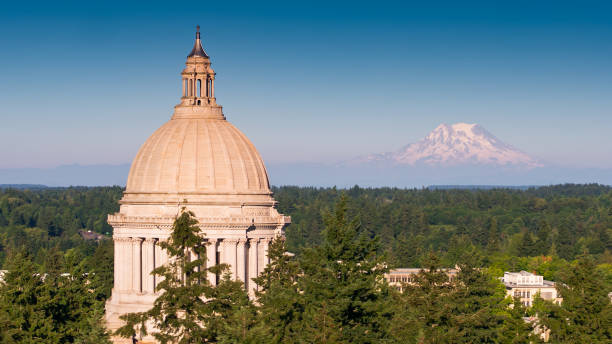
Aerial shot of the state capitol building in Olympia, Washington on a summer afternoon, with the snowy mass of Mt Rainier/Tahoma in the distance.
https://aleswa.com/wp-content/uploads/2019/07/AleswaWashingtonStamp-300x201.png00Davishttps://aleswa.com/wp-content/uploads/2019/07/AleswaWashingtonStamp-300x201.pngDavis2025-08-12 20:46:122025-08-12 20:46:20MAST training and MAST Permits
In 2023, the legislature allowed for the delivery and takeout of alcohol by on-premises licensees as well as the delivery of growlers by off-premises licensees and manufacturers. Businesses were able to request a temporary endorsement to allow for these activities.
Delivery of alcohol under these endorsements are allowed through Jul. 1, 2025. With the expiration date soon approaching, delivery of alcohol will no longer be allowed under these endorsements after Jul. 1, 2025. Takeout services do not expire and will continue to be allowed.
https://aleswa.com/wp-content/uploads/2019/07/AleswaWashingtonStamp-300x201.png00Davishttps://aleswa.com/wp-content/uploads/2019/07/AleswaWashingtonStamp-300x201.pngDavis2025-07-30 12:43:102025-07-30 12:44:20Temporary Delivery Endorsements Expiring on Jul. 1, 2025
The decision not to serve a customer who is apparently under the influence could not only save a liquor license, but it could also save someone’s life. Knowing the signs of intoxication is a must for licensees and their employees. It is illegal to serve or sell alcohol to anyone who appears to be intoxicated or “apparently under the influence” (RCW 66.44.200).
What are the common signs of intoxication?
Lack of physical coordination
Spilling drinks
Loss of muscle control
Missing mouth when raising the glass to drink
Inability to focus — squinting
Carelessness or clumsiness with money, credit cards, keys or electronic devices
Dropping or fumbling with personal items
Trouble picking up money or getting their wallet out
Dexterity problems with cell phone
Unsteady walking
Watch for customers who are bumping into furniture or other customers
Staggering when walking to and from the restrooms
Swaying while standing
Behavior changes
Becoming loud with customers or their phone
Inconsiderate of others while on their cell phone
Becoming aggressive or annoying with other customers
Swearing
Complaining about service quality or price of drinks
Becoming overly friendly
Buying rounds of drinks for strangers
Losing concentration and train of thought
Avoiding eye contact
Bobbing head or eyelids drooping
Relaxed inhibitions
Impaired judgment
Slowed reaction time or deliberate movements
Disorderly behavior
Speech patterns
Slurred words
Loud talking
Fumbling over words
Incoherent train of thought
Other Considerations
If a customer appears to explain a warning sign for possible intoxication, such as unsteady walking because of leg braces, look for additional signs that may signal intoxication. Since some characteristics of certain disabilities may mimic signs of intoxication, only through diligent communication can you assure that individuals with disabilities are treated fairly. Do not be afraid to ask questions.
DUI Place of Last Drink Program
In Washington State, law enforcement captures data from the DUI processing questionnaire regarding the place a DUI suspect may have consumed their last drink. LCB gets this data monthly from Washington State Patrol. Be aware that if a person involved in a DUI traffic stop identifies your business as their place of last drink, it may affect your license. It benefits licensees to help identify intoxication and eliminate over-service situations to prevent dangerous situations on our roads.
Alternate Transportation
It is much easier in the common era to arrange alternative transportation. If a guest has been drinking somewhere else, or has mixed their alcohol with other intoxicating substances, you can inadvertently find yourself with a drunk guest, who is not safe to drive. That is why Mandatory Alcohol Server Training has been enacted in Washington State. It aims to educate the folks actually serving the alcohol. Servers with their MAST cards, their MAST permits, understand their important role in keeping their communities safe. There is a ripple effect from establishment, to server, to community.
Thankfully, you have choices if a guest has become too intoxicated to safely drive. If they become upset at this –they have already been drinking too much.
Call them an Lyft or uber
Call a friend or family member
Also, please remember, if they get upset that day, when they return for their vehicle, they will be very thankful. Some servers have even been given flowers the next day by a grateful guest who has impaired judgment. That is, they were too drunk to know they were too drunk to drive
In Closing
Remember, alcohol affects everyone differently. A person’s level of intoxication may depend on how fast the person is drinking, the amount of food consumed, and other factors. Trust your judgement and lean on other servers or managers if you are uncertain. When in doubt, do not serve. Overserving someone showing signs of intoxication can be detrimental to both the business and public safety.
You’re not in this alone. There are resources available on the LCB website, and licensees are encouraged to contact and talk to their local LCB Enforcement Officer, who can provide education and offer over-service training to licensees and staff upon request.
https://aleswa.com/wp-content/uploads/2019/07/AleswaWashingtonStamp-300x201.png00Davishttps://aleswa.com/wp-content/uploads/2019/07/AleswaWashingtonStamp-300x201.pngDavis2025-07-30 12:22:322025-07-30 12:22:32Cutting Off and Discontinuing Alcohol Service–a Guide
Indoor areas restricted to minors may use demarcations or 42-inch barriers between dedicated dining areas and areas classified as off-limits to minors. Demarcations must be at least six inches wide and no more than 10 feet apart and cannot include tape, paint, or stickers. Examples of allowable demarcations include:
Visibly different and contrasting flooring
Steps or ramps up or down
Walls, half-walls, or 42-inch barriers
Stationary planters
Floor lighting or beacons
Permanent stanchions, pillars, posts
Outdoor Alcohol Service on Privately Owned Spaces
When serving alcohol on privately owned space outdoors, these areas must be enclosed by a permanent or movable barrier a minimum of 42 inches tall, with openings no more than 10 feet wide on each side. Examples include stations, portable barriers, and outdoor fencing.
Outdoor Alcohol Service on Publicly Owned Spaces
When serving alcohol on publicly owned property that is contiguous to the licensed premises, fence-free demarcations may be used. They must be at least six inches wide and no more than 10 feet apart, and cannot include tape, paint, or stickers. Allowable examples include:
Turtle bumps
Planter boxes
Pillars or posts
For more information on outside seating please see WAC 314–03–200.
Zoom image will be displayed
Examples of indoor area demarcations at liquor-licensed locations
Zoom image will be displayed
Zoom image will be displayed
Examples of demarcations for outdoor areas/patios at liquor-licensed locations
https://aleswa.com/wp-content/uploads/2019/07/AleswaWashingtonStamp-300x201.png00Davishttps://aleswa.com/wp-content/uploads/2019/07/AleswaWashingtonStamp-300x201.pngDavis2025-07-30 12:08:562025-07-30 12:10:23Barriers and Demarcations: when do I need them and where can I use them?
Mar. 12 at 5 p.m. was the last day for the Washington State Legislature to consider bills in their house of origin. Prior to this cutoff, LCB’s agency request legislation bill, House Bill 1698, passed the house with 95 yeas, 0 nays, 0 absent, and 3 excused.
In short, HB 1698, an act relating to updating liquor permit and licensing provisions, makes changes to definitions under the alcohol server permit statutes clarifying that all persons selling and serving alcohol for on-premises consumption at a licensed facility need to get an alcohol server permit. It also eliminates a special liquor permit and the public house liquor license, both no longer used by licensees. This bill has now been referred to the Senate’s Labor & Commerce Committee.
The policy committees in the opposite house now have until Apr. 2, 2025, to review, hear, modify, and move bills.
For more information, go to the Washington Legislature website here. You can browse bills by topic here.
https://aleswa.com/wp-content/uploads/2019/07/AleswaWashingtonStamp-300x201.png00Davishttps://aleswa.com/wp-content/uploads/2019/07/AleswaWashingtonStamp-300x201.pngDavis2025-07-30 12:06:532025-07-30 12:06:53Liquor Related Legislative Session Update
Washington State Patrol (WSP) provides LCB with data on impaired driving from their Breath Test Program. The LCB uses this information to educate license holders about potential over service. This is particularly helpful when a business has been named as the location of the last drink for multiple arrests of those caught driving above the .08% Blood Alcohol Concentration (BAC) limit.
Between Jan. 1 and Dec. 9, 2024, LCB received over 14,600 DUI reports from WSP’s Breath Test Program. Data show that:
Zoom image will be displayed
The average BAC was 0.15%. That’s nearly double the legal driving limit of 0.08%!
The majority were male.
The average was 35 years old.
About 27% of cases involved a collision.
Data from 2024 show that on average LCB gets information from about 1,300 DUI arrests using the Breath Test Program every month. Once LCB gets this information, our Enforcement and Education Division works with licensees to make sure that customers showing signs of intoxication, regardless of their BAC level, are not being served alcohol. To learn more about identifying signs of intoxication, visit our web page here.
A special thanks to those from LCB Enforcement and Education and Washington State Patrol for help with this article.
https://aleswa.com/wp-content/uploads/2019/07/AleswaWashingtonStamp-300x201.png00Davishttps://aleswa.com/wp-content/uploads/2019/07/AleswaWashingtonStamp-300x201.pngDavis2025-07-30 12:03:132025-08-12 19:29:04A Summary of 2024 DUI Data
A Mandatory Alcohol Server Training (MAST) permit is required for any person who:
Serves, mixes, sells, or supervises the sale of alcohol at an on-premises licensed location.
Conducts alcohol tastings at other licensed locations (grocery stores, beer and wine specialty shops, wineries, breweries, distilleries) and farmers markets.
Fills growlers or containers at grocery stores.
When do employees need their MAST permit?
A MAST permit is required within 60 days of the initial hire for servers, bartenders and managers working at on-premises liquor-licensed establishments. If they are conducting alcohol tastings, they must hold a Class 12 permit and be able to present it upon inspection. There is no 60-day ‘grace period’ for conducting alcohol tastings.
Employees must have their MAST permit and a valid form of ID readily available for inspection by law enforcement any time the employee performs duties that include the sale, service, or handling of alcohol. You may ask your employee to provide a copy of their MAST permit, but it is the employee’s property, not the property of the employer. A MAST permit can be used at multiple places of employment or volunteer locations in Washington state.
If you have any questions about MAST permit requirements, please contact [email protected] or (360) 664–1727 or (360) 664–1728.
https://aleswa.com/wp-content/uploads/2019/07/AleswaWashingtonStamp-300x201.png00Davishttps://aleswa.com/wp-content/uploads/2019/07/AleswaWashingtonStamp-300x201.pngDavis2025-07-30 12:01:262025-07-30 12:02:30MAST Permit Requirements While Working
Recognizing the signs of intoxication can be challenging but is necessary for both safer communities and for your customers. When in doubt, don’t serve alcohol.
The decision not to serve a customer who is apparently under the influence could not only save a liquor license, but it could also save someone’s life. Knowing the signs of intoxication is a must for licensees and their employees. It is illegal to serve or sell alcohol to anyone who appears to be intoxicated or “apparently under the influence” (RCW 66.44.200).
What are the common signs of intoxication?
Lack of physical coordination
Spilling drinks
Loss of muscle control
Missing mouth when raising the glass to drink
Inability to focus — squinting
Carelessness or clumsiness with money, credit cards, keys or electronic devices
Dropping or fumbling with personal items
Trouble picking up money or getting their wallet out
Dexterity problems with cell phone
Unsteady walking
Watch for customers who are bumping into furniture or other customers
Staggering when walking to and from the restrooms
Swaying while standing
Behavior changes
Becoming loud with customers or their phone
Inconsiderate of others while on their cell phone
Becoming aggressive or annoying with other customers
Swearing
Complaining about service quality or price of drinks
Becoming overly friendly
Buying rounds of drinks for strangers
Losing concentration and train of thought
Avoiding eye contact
Bobbing head or eyelids drooping
Relaxed inhibitions
Impaired judgment
Slowed reaction time or deliberate movements
Disorderly behavior
Speech patterns
Slurred words
Loud talking
Fumbling over words
Incoherent train of thought
Other Considerations
If a customer appears to explain a warning sign for possible intoxication, such as unsteady walking because of leg braces, look for additional signs that may signal intoxication. Since some characteristics of certain disabilities may mimic signs of intoxication, only through diligent communication can you assure that individuals with disabilities are treated fairly. Do not be afraid to ask questions.
DUI Place of Last Drink Program
In Washington State, law enforcement captures data from the DUI processing questionnaire regarding the place a DUI suspect may have consumed their last drink. LCB gets this data monthly from Washington State Patrol. Be aware that if a person involved in a DUI traffic stop identifies your business as their place of last drink, it may affect your license. It benefits licensees to help identify intoxication and eliminate over-service situations to prevent dangerous situations on our roads.
https://aleswa.com/wp-content/uploads/2019/07/AleswaWashingtonStamp-300x201.png00Davishttps://aleswa.com/wp-content/uploads/2019/07/AleswaWashingtonStamp-300x201.pngDavis2025-07-30 11:58:412025-08-12 20:15:07Over-Service: When to Draw the Line?